
Source: This page is based on the patient booklet “Managing your Addison’s disease or adrenal insufficiency” by the Addison’s Disease Self-Help Group (ADSHG) (last reviewed June 2025). It contains no personal dosing instructions; always agree your own treatment plan and doses with your endocrinologist. More information: addisonsdisease.org.uk
On this page:
- What is Addison’s disease and adrenal insufficiency?
- Symptoms
- Diagnosis and follow-up
- Principles of treatment
- Approximate steroid equivalences
- Crisis and being prepared
- Special situations
- Associated conditions
- Information cards
- Sources and important notice
Patient stories → · Adrenal crisis: what to do? → · Be prepared →
What is Addison’s disease and adrenal insufficiency?
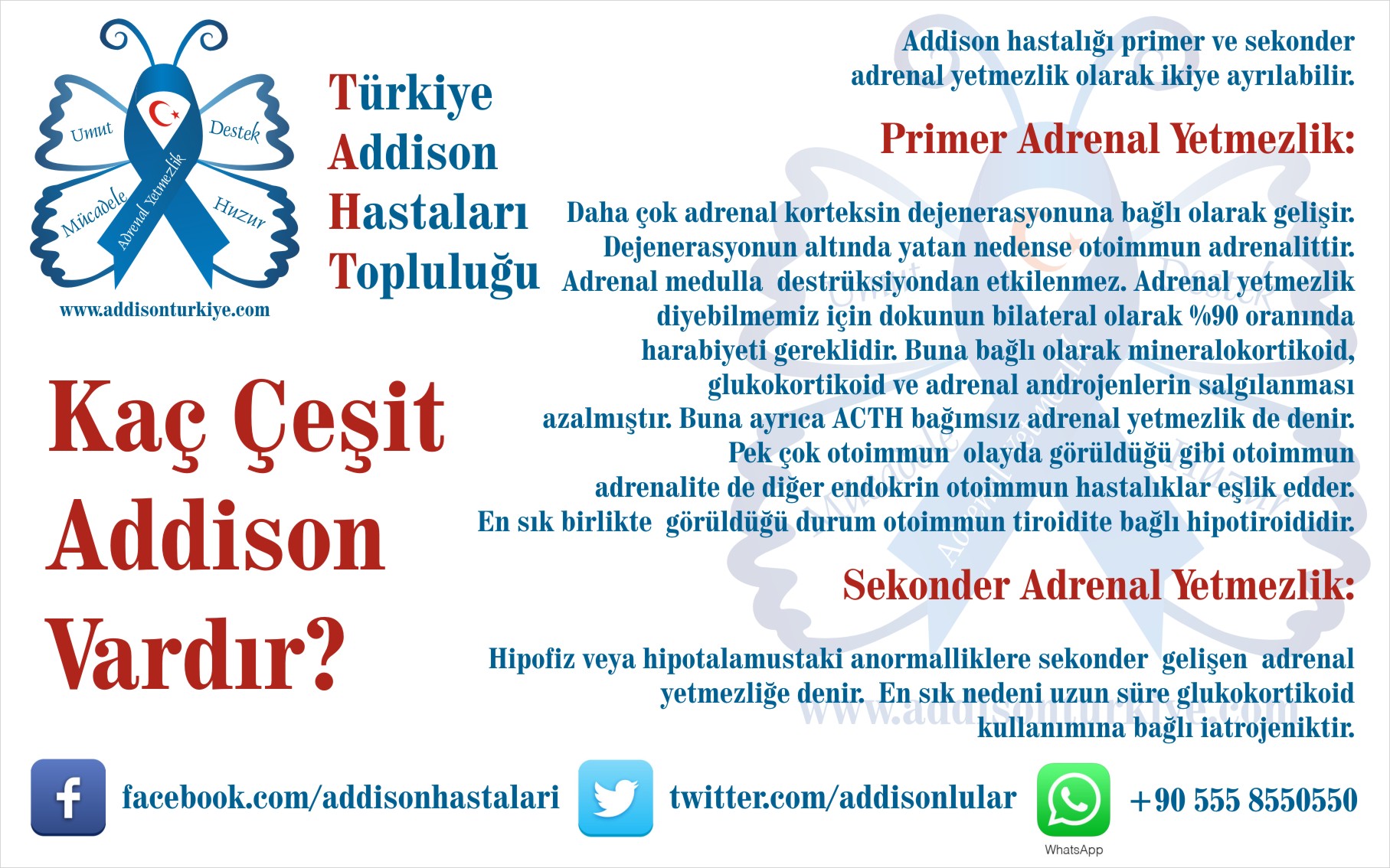
Addison’s disease, also known as primary adrenal insufficiency, is a type of adrenal insufficiency. It occurs when the adrenal glands, which sit on top of the kidneys, cannot produce the steroid hormones that are essential for life — especially cortisol. It is a rare endocrine condition affecting around 1 in 10,000 people of all ages and sexes.
The adrenal glands and their hormones
The outer layer of the adrenal glands (cortex) produces steroid hormones that are important for life:
| Hormone | Role (summary) |
|---|---|
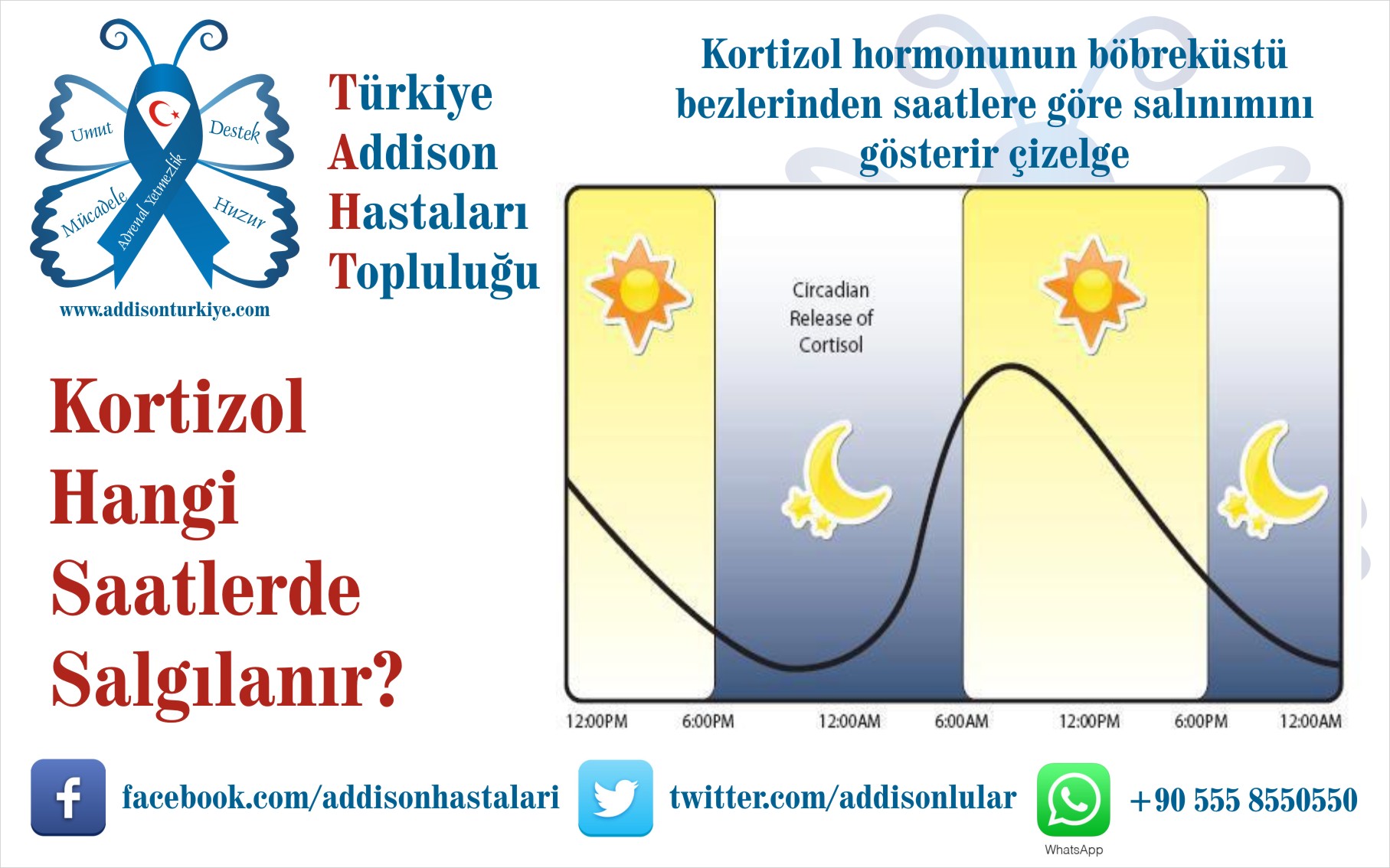
| Cortisol (glucocorticoid) | Essential for life. Helps regulate the stress response, blood sugar, blood pressure, energy and appetite. Controlled by ACTH from the pituitary; high in the morning, low at night. |
| Aldosterone (mineralocorticoid) | Regulates salt–potassium and fluid balance through the kidneys, and therefore blood pressure. |
| DHEA (adrenal androgens) | Important for resilience, energy and libido. |
The inner part (medulla) produces adrenaline; in Addison’s disease there is usually no significant deficiency here.
Three types of adrenal insufficiency
- Primary — Addison’s disease: the problem is in the adrenal glands themselves; first described by Dr Thomas Addison in the 1850s. Usually both cortisol and aldosterone (and DHEA) are missing. ACTH rises, which can cause darkening of the skin.
- Secondary: the pituitary gland, which “manages” the adrenals, does not make enough ACTH (pituitary tumour, surgery, radiotherapy, Sheehan’s syndrome after childbirth, etc.). Aldosterone is usually preserved and the skin does not darken.
- Tertiary / steroid-induced: long-term steroid medicines for asthma, rheumatic, skin or joint conditions suppress the body’s own cortisol production. Stopping them suddenly can cause adrenal insufficiency and crisis; tapering must be done under medical supervision.
Causes of Addison’s disease
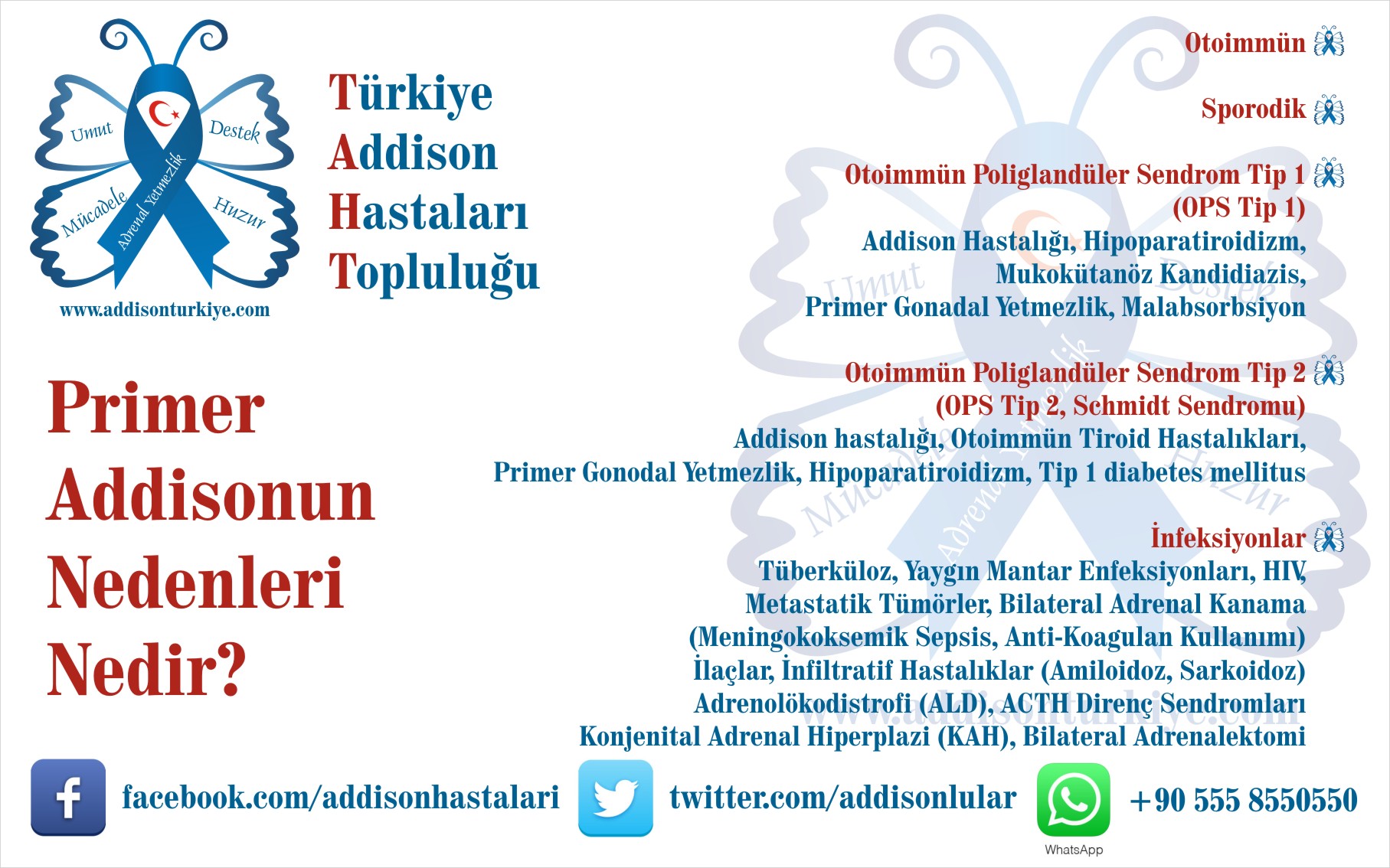
- Autoimmune damage (most common): the immune system mistakenly attacks the adrenal cortex (usually 21-hydroxylase antibodies). The exact cause of this attack is unknown.
- Tuberculosis and some other infections — formerly the most common cause, still important in some regions.
- Bleeding into the adrenal glands, spread of cancer (metastasis) or removal of both adrenal glands.
- Genetic causes: congenital adrenal hyperplasia, adrenoleukodystrophy (especially in boys and young men) and other rare conditions.
- Some medicines that affect hormone production — your doctor will assess this.
Symptoms
Symptoms often develop slowly over months and can be mistaken for other conditions. People with adrenal insufficiency often describe some or all of the following:
- Extreme, overwhelming fatigue; weakness
- Muscle weakness, cramps, muscle and joint pain
- Loss of appetite and weight loss
- Nausea, vomiting, abdominal pain, diarrhoea
- Low blood pressure; dizziness on standing
- Difficulty concentrating / “brain fog”, low mood
- In women, irregular periods and reduced underarm/pubic hair
- Darkening of the skin and inside the mouth (a tanned look without sun exposure) — primary insufficiency (Addison’s) only
- Salt craving — primary insufficiency (Addison’s) only
Blood tests may show low sodium, high potassium (in primary insufficiency), low blood sugar, and sometimes mild anaemia or changes in kidney values. These findings do not make the diagnosis on their own but point the doctor towards adrenal insufficiency. For signs of sudden, severe deterioration: warning signs of adrenal crisis →
Diagnosis and follow-up
Some symptoms are shared with other autoimmune and endocrine conditions, so diagnosis is not always straightforward. The diagnosis is made by an endocrinologist. The main tests are:
- Morning cortisol and ACTH: usually taken together early in the morning. Low cortisol with high ACTH suggests primary insufficiency; both low suggests secondary.
- ACTH stimulation (short Synacthen) test: checks whether cortisol rises adequately after synthetic ACTH; the test most often used to confirm the diagnosis.
- Renin and aldosterone: show whether there is aldosterone (mineralocorticoid) deficiency.
- Electrolytes (sodium, potassium), blood sugar, kidney function, blood count.
- Adrenal antibodies: support an autoimmune cause. If negative, further tests and adrenal imaging may be needed.
- If needed: imaging (adrenal CT/MRI, pituitary MRI in secondary insufficiency), tuberculosis tests, genetic tests.
Cortisol measurements taken while on steroid medicines can be misleading; never decide yourself whether to stop your medicine before a test — follow your doctor’s instructions. Results are interpreted individually; no numerical cut-offs are given on this page.
Regular follow-up
Keep your endocrinology appointments. Check-ups usually look at your symptoms, weight and blood pressure (lying and standing), electrolytes and, when needed, renin. Your doctor may from time to time request blood count, blood sugar/HbA1c, thyroid tests, B12, calcium and a bone health assessment. Detailed checklist: Be prepared – monitoring →
Principles of treatment
Treatment means lifelong replacement of the hormones the body cannot make (replacement therapy). The medicine classes used are:
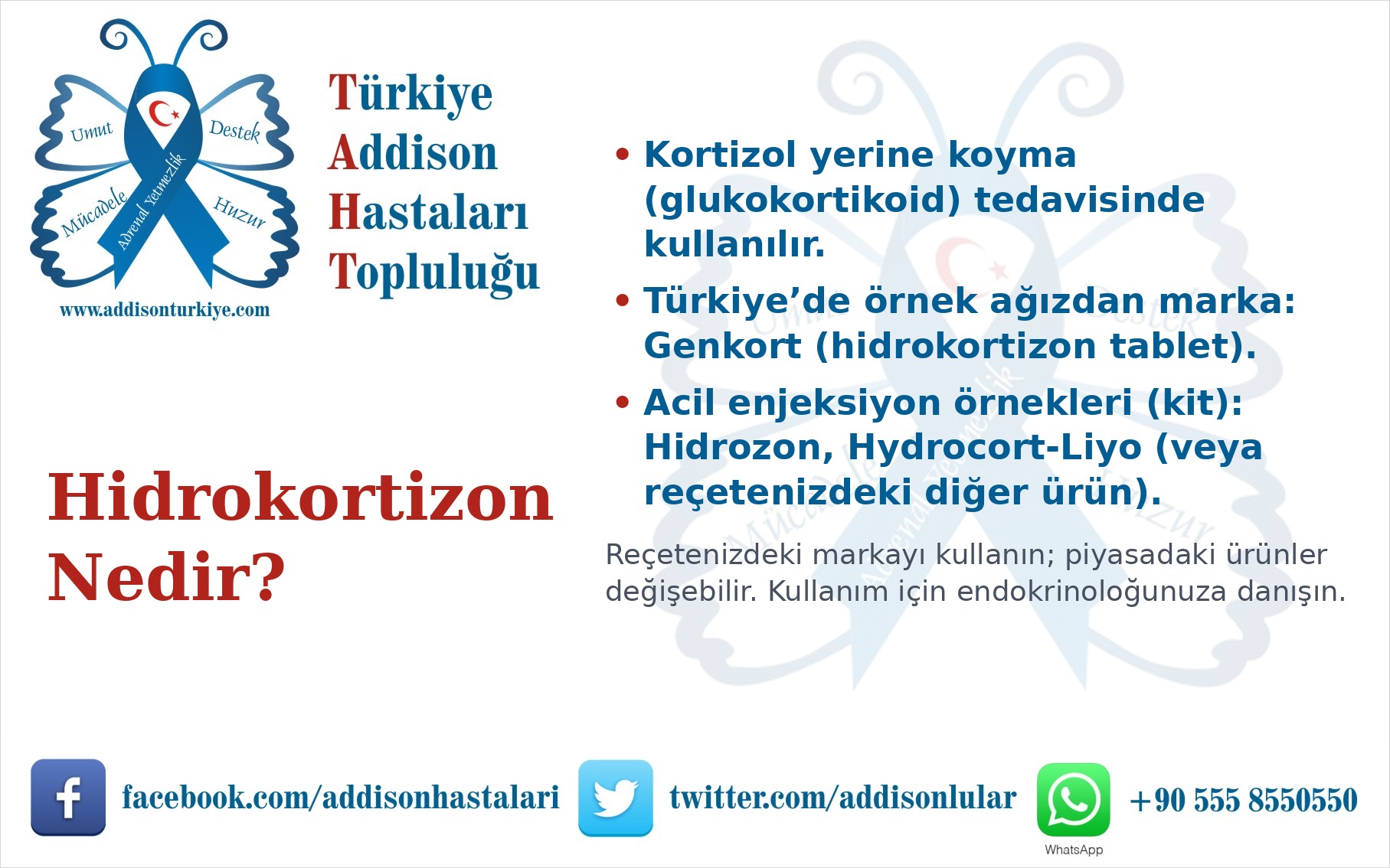
- Glucocorticoid (replaces cortisol): most often hydrocortisone — chemically identical to natural cortisol. Some people may be prescribed another, longer-acting glucocorticoid such as prednisolone.
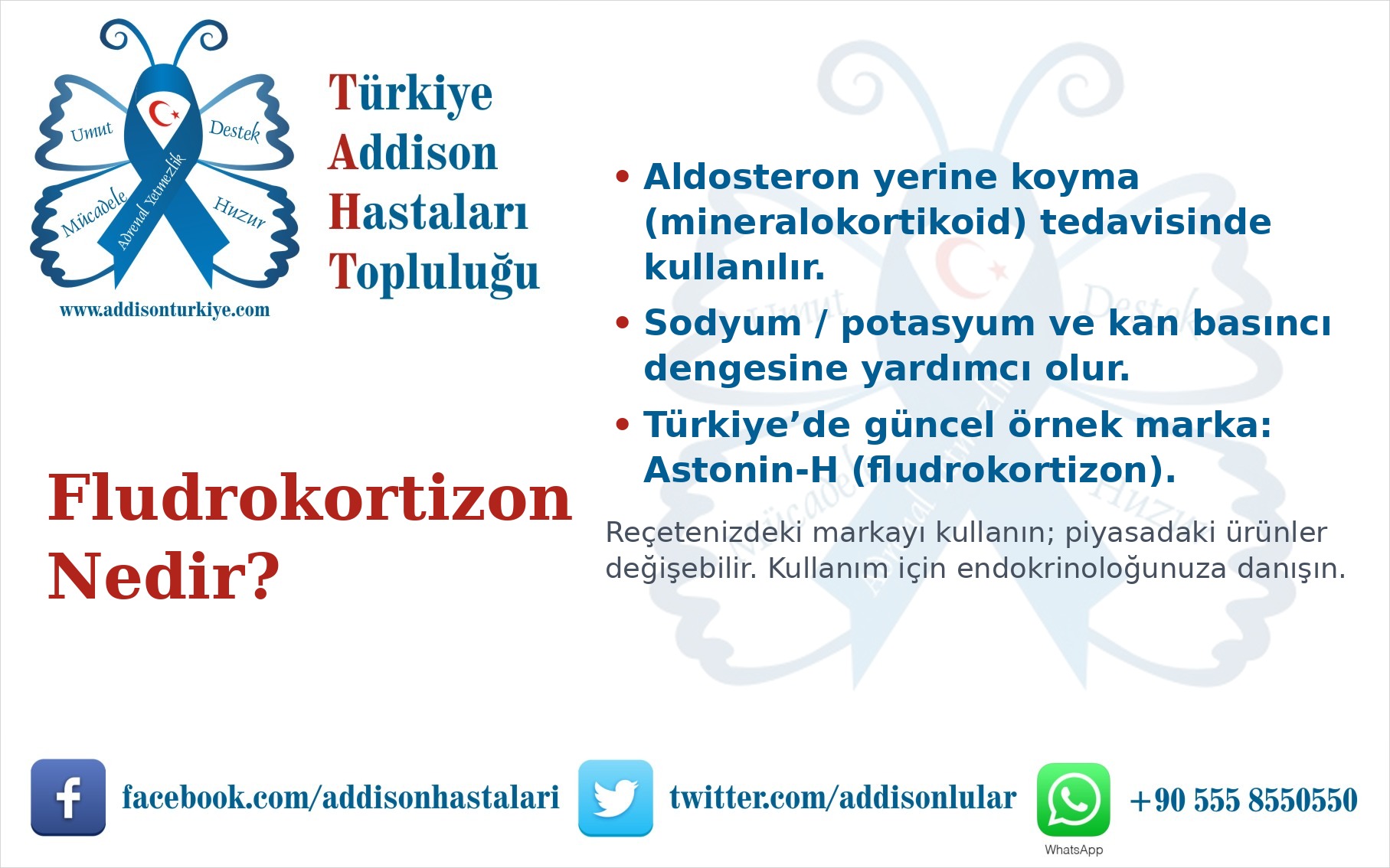
- Mineralocorticoid (replaces aldosterone): fludrocortisone — needed only in primary insufficiency (Addison’s). Store at room temperature in a dry place.
- DHEA: may sometimes be considered for ongoing fatigue or low libido after discussion with your endocrine team; evidence for its use is limited.
In healthy glands cortisol rises in the early morning and falls during the day. Glucocorticoid medicine is often split through the day to mimic this natural curve. Which medicine, what dose, how many times a day and at what times are individual and decided only by your endocrinologist; finding the right routine may take a few adjustments. In children all doses are individual and set by a paediatric endocrinologist.
Important: never change, reduce or stop your medicine, dose or type of steroid on your own. Fever, infection, vomiting or diarrhoea, injury or surgery may require a temporary increase — agree this in advance with your endocrinologist as a written plan: sick-day rules →
Replacement therapy ≠ high-dose steroid treatment
“Steroid” or “cortisone” medicines are used in two very different ways. In Addison’s disease the aim is to replace the missing hormone in normal amounts; it is essential for life and is never stopped. In asthma, rheumatic disease or allergy, much higher doses may be used to suppress inflammation. Warnings about the side effects of high-dose steroids should not lead people with Addison’s to cut down or stop their medicine: for a person with Addison’s, the real danger is taking too little. “Anabolic steroids” used in sport are a completely different group of drugs.
Side effects and the “lowest effective dose”
Because replacement therapy aims for natural hormone levels, most people do not experience long-term side effects. Some people get stomach irritation with hydrocortisone; your doctor may suggest taking tablets with food or a stomach-protecting medicine. Taking more than you need over a long period can increase risks such as weight gain, osteoporosis, raised blood sugar and blood pressure, or glaucoma. The aim is therefore the lowest dose that keeps you well; if your symptoms change, talk to your doctor rather than changing the dose yourself.
People taking long-term steroids
People who take steroids for weeks or months for another condition can also have their own cortisol production suppressed. They too should never stop suddenly, should taper only under medical supervision, should know they may need extra steroid during illness, surgery or injury, and should carry a steroid emergency card.
Practical tips for daily use
- Take your medicines at the same times every day; a phone alarm helps.
- Keep spare medicine at home, in your bag and at work; renew prescriptions before they run out.
- Always tell other doctors, your dentist or pharmacist that you have Addison’s and take steroids; some medicines can affect your steroid needs.
- If you have trouble getting your medicine, do not switch to another one yourself; ask your endocrinologist.
Approximate steroid equivalences
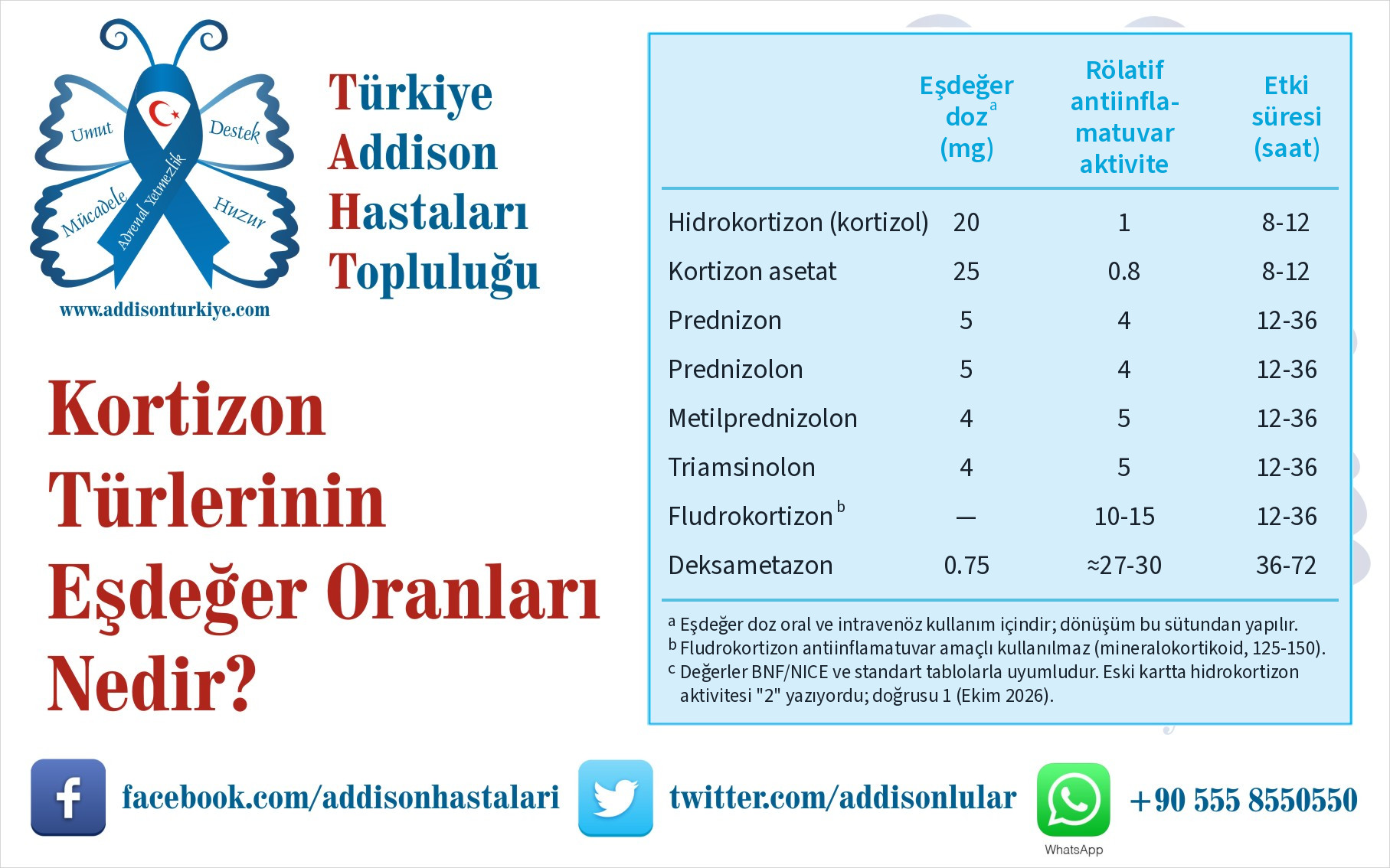
The table below is a general reference used to compare the approximate relative potency of different steroid medicines. For example, “20 mg hydrocortisone” and “5 mg prednisolone” correspond to roughly similar glucocorticoid effect. It is not a personal dose schedule or a treatment recommendation.
| Medicine (active ingredient) | Approximate equivalent glucocorticoid potency* | Salt-retaining (mineralocorticoid) effect | Duration of action |
|---|---|---|---|
| Hydrocortisone | 20 mg | Yes | Short |
| Cortisone acetate | 25 mg | Yes | Short |
| Prednisolone / prednisone | 5 mg | Low | Intermediate |
| Methylprednisolone | 4 mg | Very low | Intermediate |
| Dexamethasone | 0.75 mg | Negligible | Long |
| Fludrocortisone | Not used as a glucocorticoid | Strong | — replaces aldosterone in Addison’s |
* Values are approximate and only for comparing medicines; absorption, duration of action and individual needs differ from person to person. Switching from one medicine to another is not a simple one-to-one calculation.
Important: Do not change your dose or switch your medicine yourself; always consult your endocrinologist about any change in dose or medicine. For what to do during illness, see our sick day rules. You can also use our steroid dose converter to make comparison easier; always review its results with your doctor.
Can Addison’s disease be cured?
In autoimmune Addison’s disease the damaged adrenal tissue usually does not recover, so treatment is lifelong. But with correct treatment, sick-day rules, an emergency injection kit and a good emergency plan, most people can work, exercise, travel and have a family. In steroid-induced (tertiary) insufficiency the glands may recover over time; this is monitored by your doctor. Do not trust products or methods that promise to “cure” Addison’s.
Crisis and being prepared
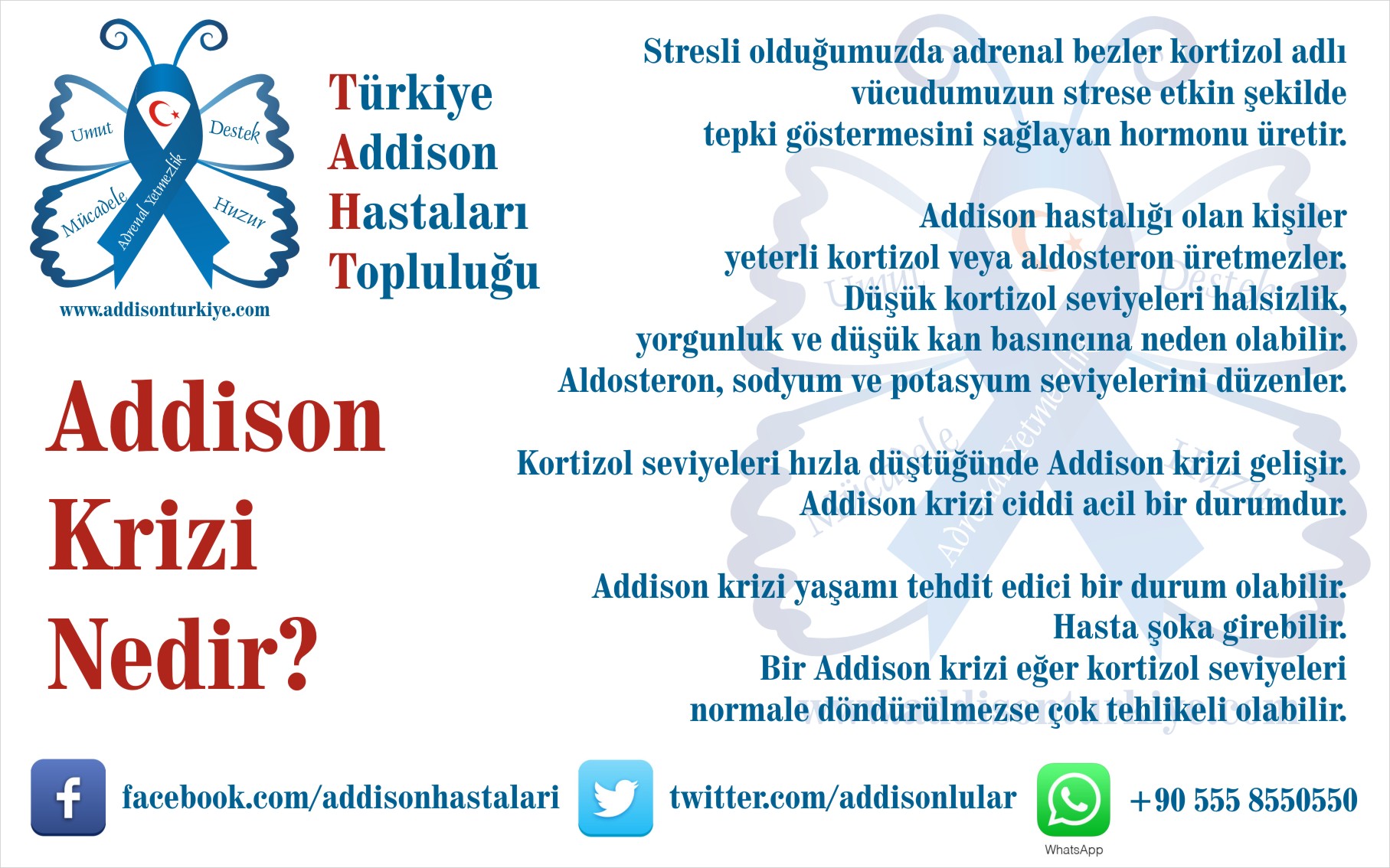
An adrenal (Addisonian) crisis is a life-threatening emergency in which the body’s need for cortisol is not met. Common triggers: feverish illness and infections, vomiting and diarrhoea (tablets are not absorbed), accidents and injuries, surgery or dental extraction, missed, run-out or suddenly stopped medicine, and fluid loss in extreme heat.
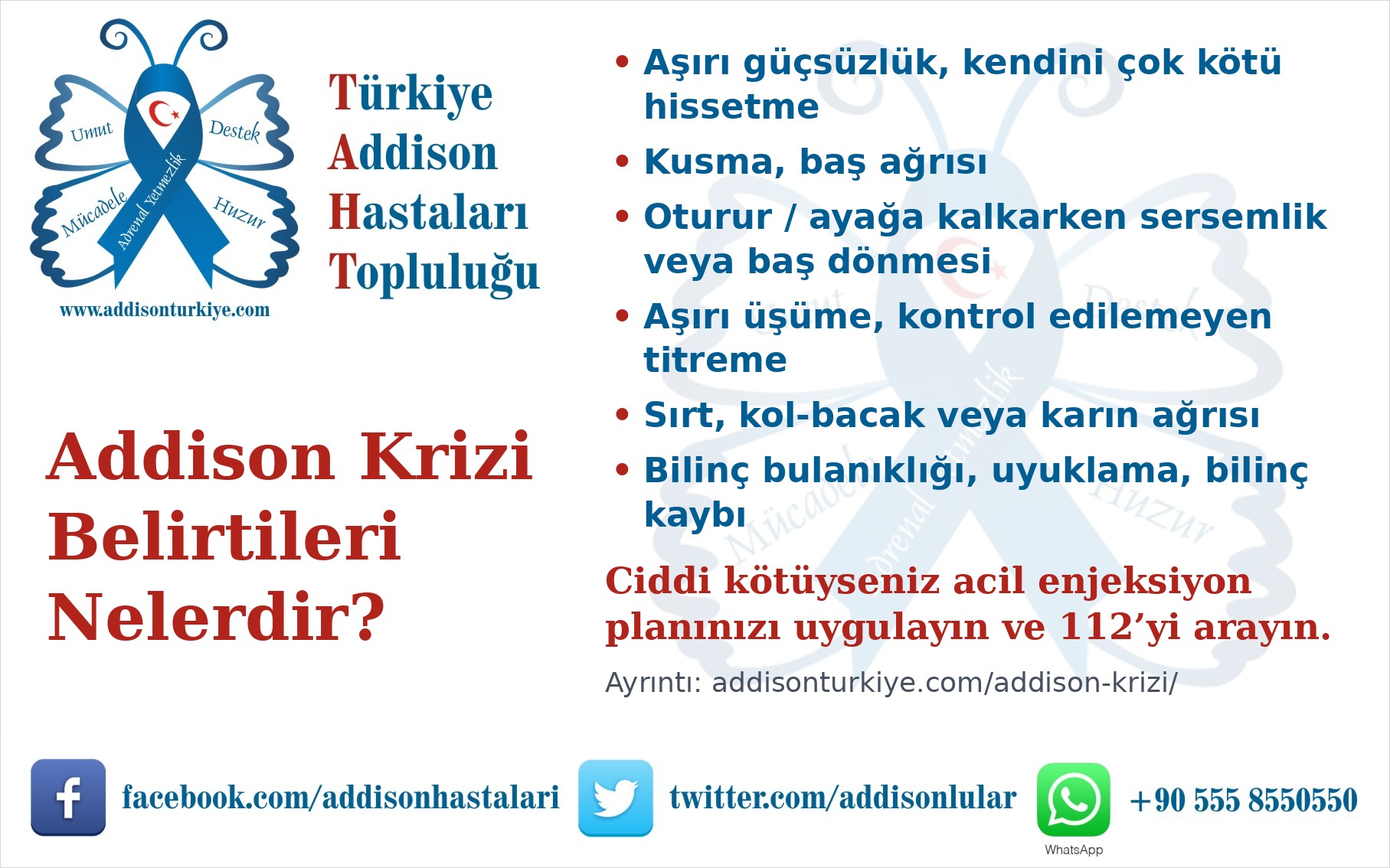
If you become seriously unwell, use your prescribed emergency injection kit according to your emergency plan, call 112 (emergency number in Türkiye) and tell the team that you have Addison’s disease, may be having an adrenal crisis, and must take steroids regularly.
- Adrenal crisis: warning signs and what to do →
- Be prepared: sick-day rules, emergency kit, monitoring →
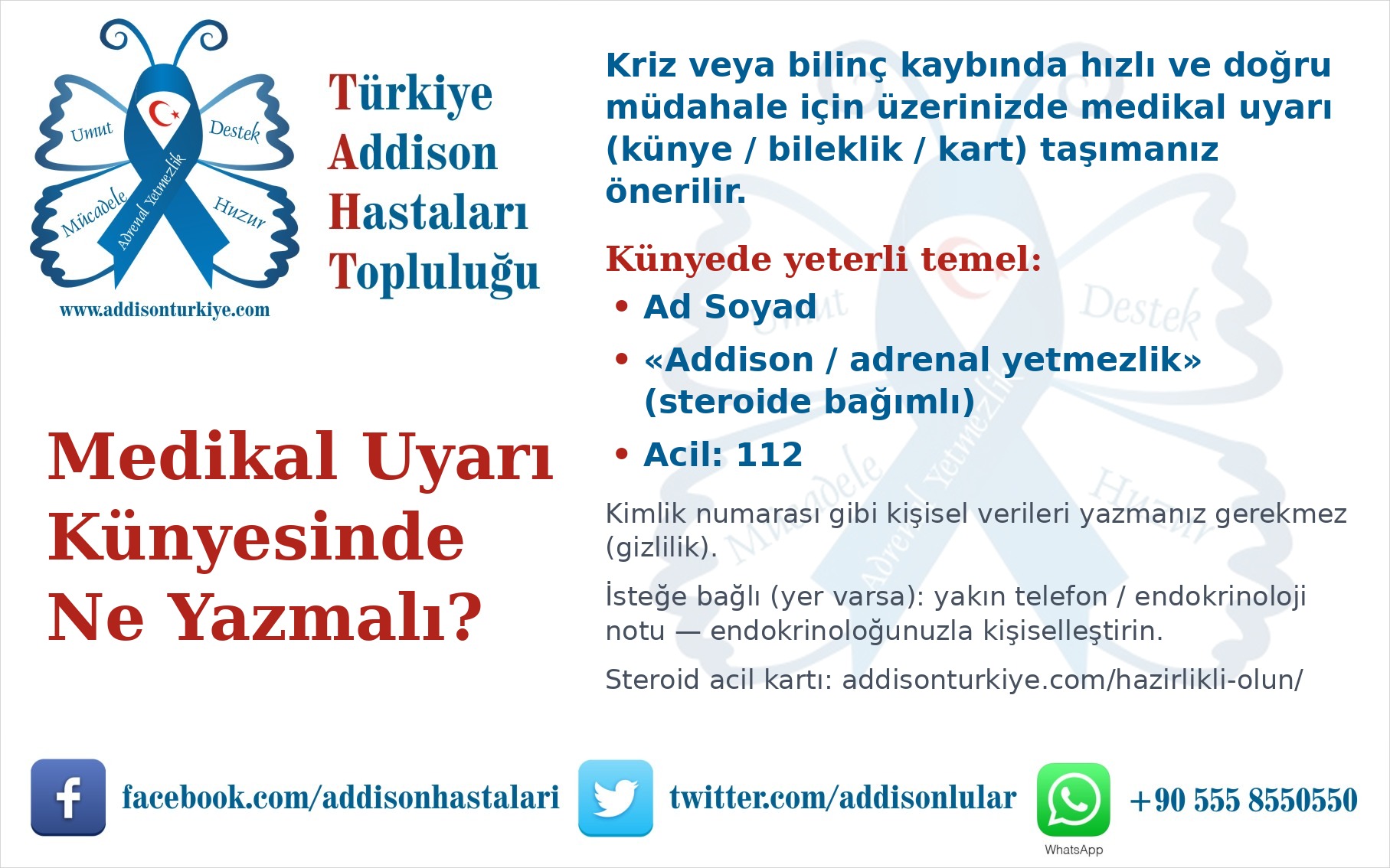
- Steroid emergency card →
Special situations
Pregnancy and childbirth
Many women with Addison’s disease have healthy pregnancies and healthy babies. Plan pregnancy in advance with your endocrinologist; endocrinology and obstetrics should follow you together throughout. Medication needs can change during pregnancy; only your doctor adjusts them. Vomiting in early pregnancy can stop tablets being absorbed — if you cannot keep tablets down, do not wait: follow your sick-day plan and seek medical care. Ask your team for a written birth/steroid plan and take your steroid emergency card to the delivery ward.
Surgery, dental and other procedures
Surgery, childbirth, dental extraction, endoscopy and similar procedures are a stress for the body and may require extra steroid. Before the procedure, ask your endocrinologist and the treating team (anaesthetist, dentist) for a written plan, tell them you have Addison’s, and carry your card.
Periods of illness
Learn in advance what to do with fever, infection, vomiting or diarrhoea; if you cannot take tablets because of vomiting, get emergency help without delay. Details: sick-day rules →
Fasting
Going without food and water for long periods causes dehydration, low blood sugar, salt–potassium imbalance and shifted medicine times; each of these can trigger a crisis. Our community’s advice is that people with Addison’s should not fast. Islamic teaching exempts people with health conditions; you can ask a religious official about the options. If you are still considering it, talk to your endocrinologist well in advance.
Psychological support
Accepting the diagnosis, taking medicine for life and living with the fear of crisis can be hard. If you have lasting anxiety, low mood, loss of interest, sleep or appetite changes, or find yourself skipping treatment, tell your doctor and consider psychological support. Some complaints (tiredness, low mood, poor concentration) can also be linked to under-treatment, so share them with your endocrinologist too. If you have thoughts of harming yourself, call 112 immediately. You are not alone: our WhatsApp group →
Diet and exercise
Do not skip meals. Salt restriction is generally not advised in primary Addison’s; salt and fluid needs can rise in hot weather and with sweating — ask your doctor about your own situation. Regular exercise supports bone and muscle health; discuss fluids and medicine with your doctor for long or intense exercise. Do not change your medicine or diet on your own based on something you read online or in a group.
Associated conditions
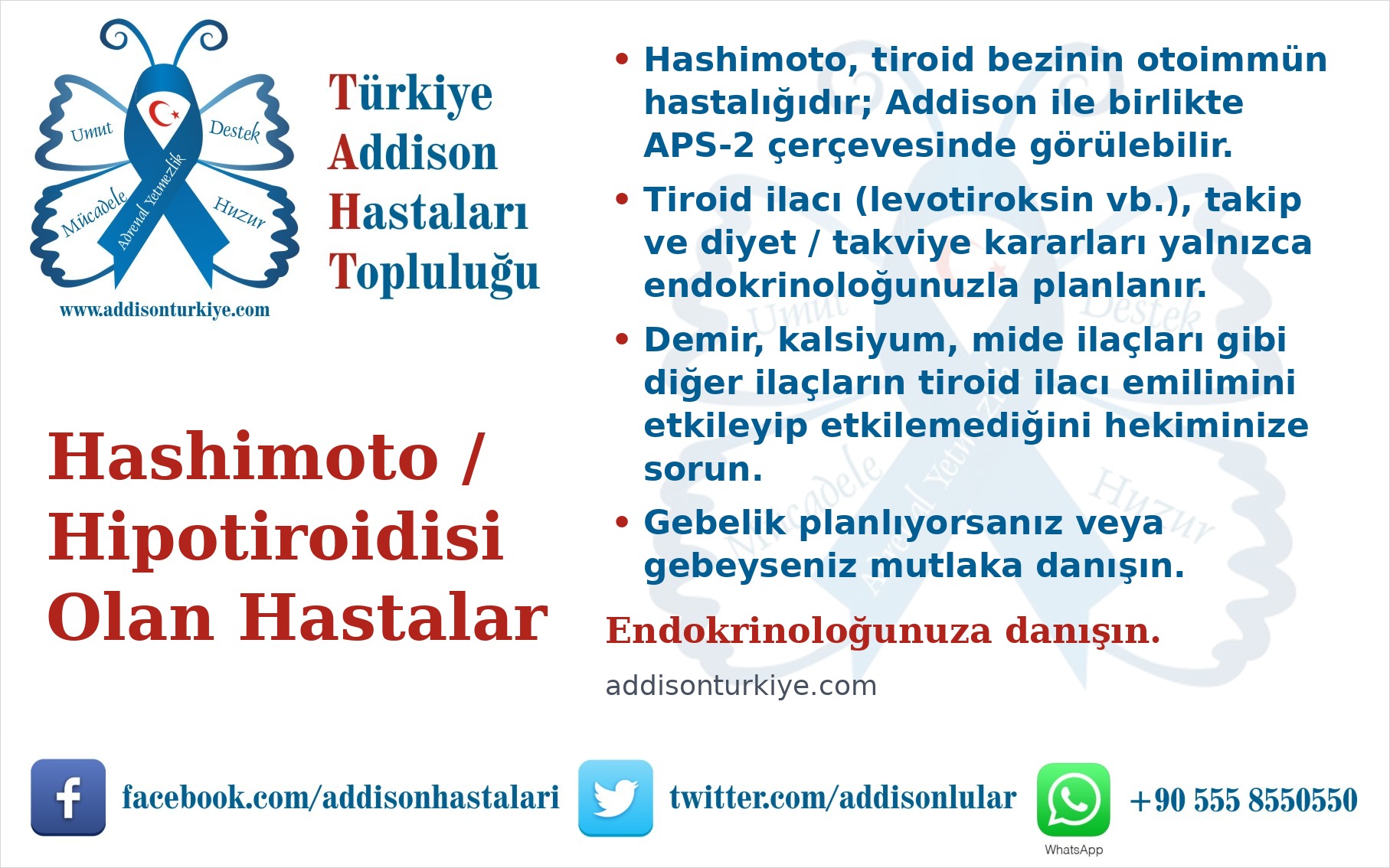
Autoimmune Addison’s disease can occur together with other autoimmune conditions: hypothyroidism (most often Hashimoto’s thyroiditis), Graves’ disease, type 1 diabetes, coeliac disease, pernicious anaemia (B12 deficiency), vitiligo, early menopause. When several glands are affected this is called autoimmune polyglandular syndrome (APS); the most common type, APS-2, occurs in adults, while APS-1 is rare, genetic and usually starts in childhood.
If Addison’s and hypothyroidism occur together, the order in which treatment starts matters: starting thyroid hormone alone in untreated adrenal insufficiency can trigger a crisis; your endocrinologist decides the order. Report any new symptoms to your doctor.
Information cards
Information cards prepared by our community (click an image to enlarge; ask your doctor about current treatment):






Sources and important notice
- ADSHG, “Managing your Addison’s disease or adrenal insufficiency” patient booklet (June 2025) — addisonsdisease.org.uk
- Additional medical sources: Prof. Dr. Cengiz Kırmaz (doktorsitesi.com), Dr. Nuri Çakır, Hacettepe University (Varan & Gürlek, 2010) and a case report published in Ege Tıp Dergisi. Individual doses and unverified advice have been deliberately removed.
Related pages: Patient stories · Disability Rights · Adrenal crisis · Be prepared
In an emergency in Türkiye, call 112. Always consult your own doctor (endocrinologist) about diagnosis, treatment and any dose change.
Medical disclaimer: The information on this site is prepared by a patient community for general information only. Always consult your own doctor (endocrinologist) about diagnosis, treatment or any dose change. In an emergency in Türkiye, call 112.