
Priority: normal · Status: published
Date: 2026-11-10 (Global Adrenal Testing Consortium (GATC), press release)
Source: Global Adrenal Testing Consortium (GATC) — press release (PDF) — https://gatconsortium.org/wp-content/uploads/2026/11/Press-Release-FDA-Partnership-Nov10-2026.pdf
What happened?
The Global Adrenal Testing Consortium (GATC), a US-based, patient-led non-profit for adrenal insufficiency, published a press release on 10 November 2026.
According to the release, GATC has been accepted into the “Patient and Caregiver Connection” (PCC) program of the US Food and Drug Administration’s (FDA) Center for Devices and Radiological Health (CDRH).
What is this about? (short)
The PCC program was set up in 2018. Its aim is to bring patient and caregiver perspectives into how medical devices are developed and evaluated.
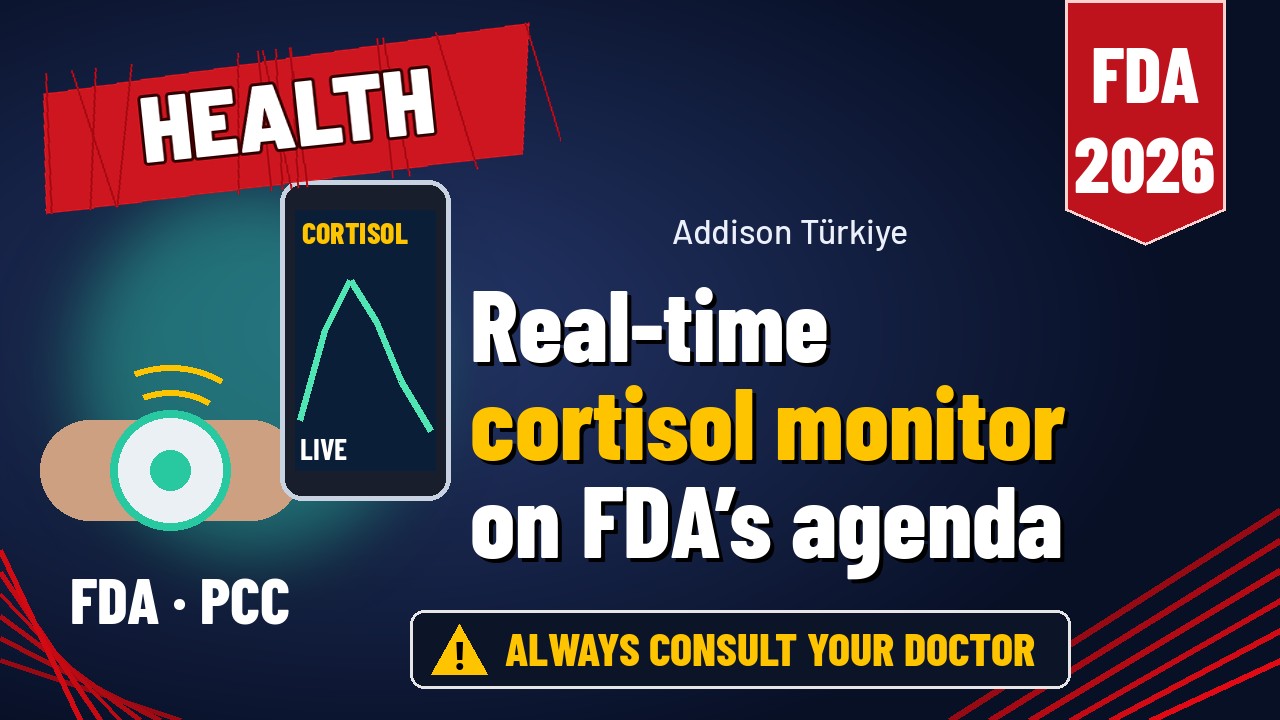
GATC focuses on devices that could measure cortisol in real time. Continuous glucose monitors (CGM) are now common in diabetes, but no comparable cortisol monitor exists for adrenal insufficiency yet.
Announcement summary
The release states that no device currently lets patients and doctors measure cortisol in real time, so treatment decisions are often based on symptoms alone.
According to GATC, this raises the risk of both over- and under-replacement of steroids; in severe cases, too little cortisol can trigger a life-threatening adrenal crisis.
The release says device makers are developing continuous cortisol monitors, and GATC will work directly with the FDA so that these devices work for patients in the real world.
GATC says it is the first adrenal insufficiency organisation in the program and has stakeholders in 25 countries. It also announced a collaboration with Trialport to connect patients with clinical trials.
Who is it for?
Everyone living with cortisol deficiency, including Addison’s disease, congenital adrenal hyperplasia (CAH) and pituitary-related adrenal insufficiency, and the doctors who care for them.
Access / country context
This is not an approval or product launch: there is no approved continuous cortisol monitor on the market. The news is about patients having a voice as such devices are developed.
The program is in the US, but FDA device decisions often guide regulators in other countries.
What it means for patients in Türkiye
In Türkiye, as elsewhere, cortisol is measured today with blood, urine or saliva tests in a laboratory; day-to-day decisions rely on symptoms and your doctor’s plan.
If real-time cortisol monitors arrive in the future, they could make stress-dose and sick-day decisions more data-driven. Until then, keep your treatment plan and emergency card up to date with your doctor.
Warning: This is a news summary, not dose or treatment advice. Ask your endocrinologist.
Prepared by: Asistan · 16 November 2026. Source: Global Adrenal Testing Consortium (GATC) press release.
Medical disclaimer: Information on this site is prepared by a patient community for general awareness; for diagnosis, treatment or dose changes always consult your own doctor (endocrinologist). In an emergency call your local emergency number.