
Priority: normal · Status: published
Date: 2026-11-16 (European Journal of Endocrinology, online ahead of print)
Source: European Journal of Endocrinology — PubMed — https://pubmed.ncbi.nlm.nih.gov/43038356/ · DOI: https://doi.org/10.1093/ejendo/lvag205
What happened?
A study by researchers from three major Danish hospital centres (Copenhagen Rigshospitalet, Aarhus and Odense) was published online in the European Journal of Endocrinology on 16 November 2026.
It looked at which symptoms people experience when long-term steroid (glucocorticoid) use has suppressed their adrenal glands, and how they use these symptoms to decide on a “stress dose”.
What is this about? (short)
People who take steroids such as prednisolone for a long time — for rheumatic disease, asthma or bowel disease, for example — can have their own cortisol production suppressed. This is called glucocorticoid-induced adrenal insufficiency (GIAI) and it is more common than often thought.
A “stress dose” is extra hydrocortisone, planned in advance by the doctor, to cover the body’s higher cortisol needs during fever, vomiting or serious illness. Knowing when it is needed often depends on symptoms.
Study summary
First, 11 endocrinologists from Danish adrenal centres rated a standard list of 80 symptoms (PRO-CTCAE) for relevance and selected 14 symptoms to ask patients about.
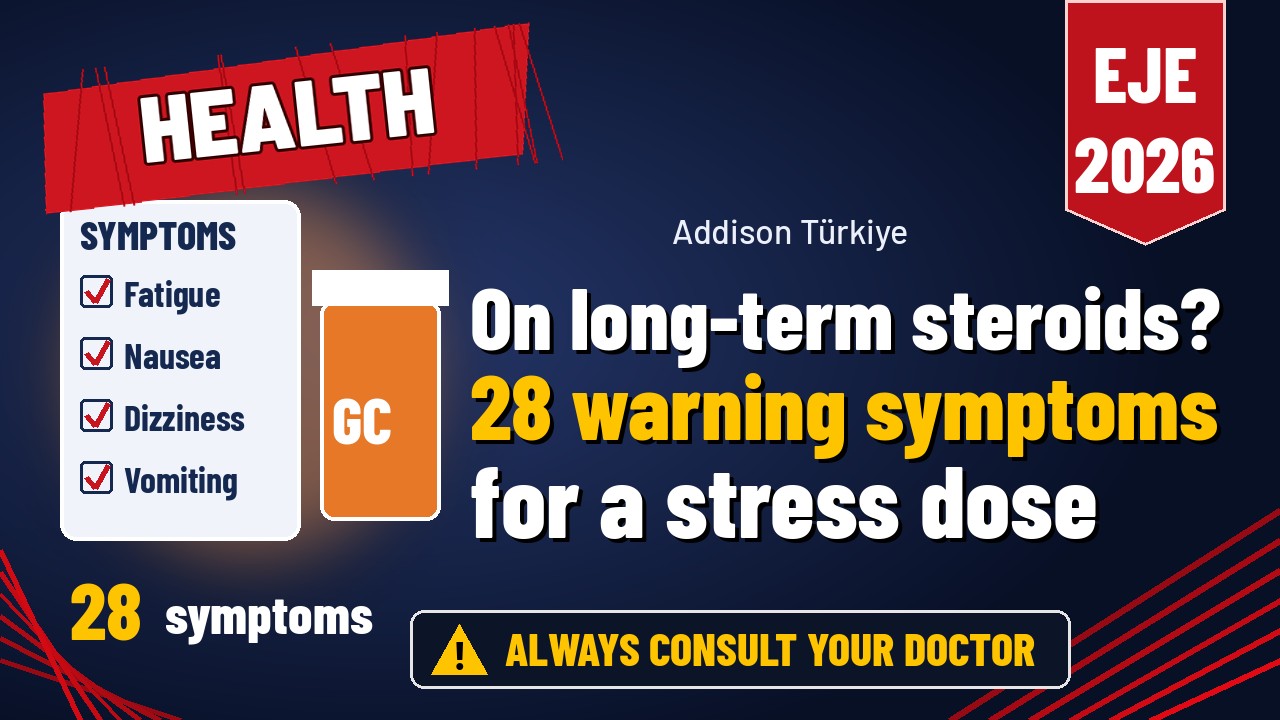
Then 30 patients who had lived with GIAI for at least 6 months were interviewed in depth. They added 14 more symptoms, giving a final list of 28.
The most frequently reported symptoms were fatigue, feeling unwell, lethargy, difficulty concentrating and nausea (each in at least 60% of patients).
The symptoms rated most important for deciding on a stress dose were vomiting, nausea, dizziness, hot flushes, fatigue and feeling unwell. The study is small and interview-based; it is not a diagnostic tool but a patient-centred basis for symptom monitoring.
Who is it for?
People who have taken steroid medicines for a long time, or who are tapering or stopping them.
People with Addison’s will recognise many of these symptoms, but the study was done specifically in medicine-related (secondary) adrenal insufficiency.
Access / country context
This is not a new drug or test; it produces a structured list of symptoms that could later be used in patient education materials and questionnaires.
What it means for patients in Türkiye
Long-term steroid use is common in Türkiye too. If you take steroids or are reducing them, it is important to agree with your doctor in advance what to do with which symptoms and to have a written sick-day plan.
Vomiting, or being unable to keep tablets down, can be an emergency; do not hesitate to call 112. The amount and timing of a stress dose is a decision for your doctor only; this article gives no dose information.
Warning: This is a news summary, not dose or treatment advice. Ask your endocrinologist.
Prepared by: Asistan · 23 November 2026. Source: European Journal of Endocrinology article abstract (PubMed).
Medical disclaimer: Information on this site is prepared by a patient community for general awareness; for diagnosis, treatment or dose changes always consult your own doctor (endocrinologist). In an emergency call your local emergency number.