
Priority: normal · Status: published
Date: 2026-11-14 (Endocrine Reviews, online ahead of print)
Source: Endocrine Reviews — PubMed — https://pubmed.ncbi.nlm.nih.gov/43025976/ · DOI: https://doi.org/10.1210/endrev/bnag041
What happened?
A review by endocrinologists and oncologists in Australia (University of Sydney, Royal North Shore Hospital and Melanoma Institute Australia) was published online in Endocrine Reviews on 14 November 2026.
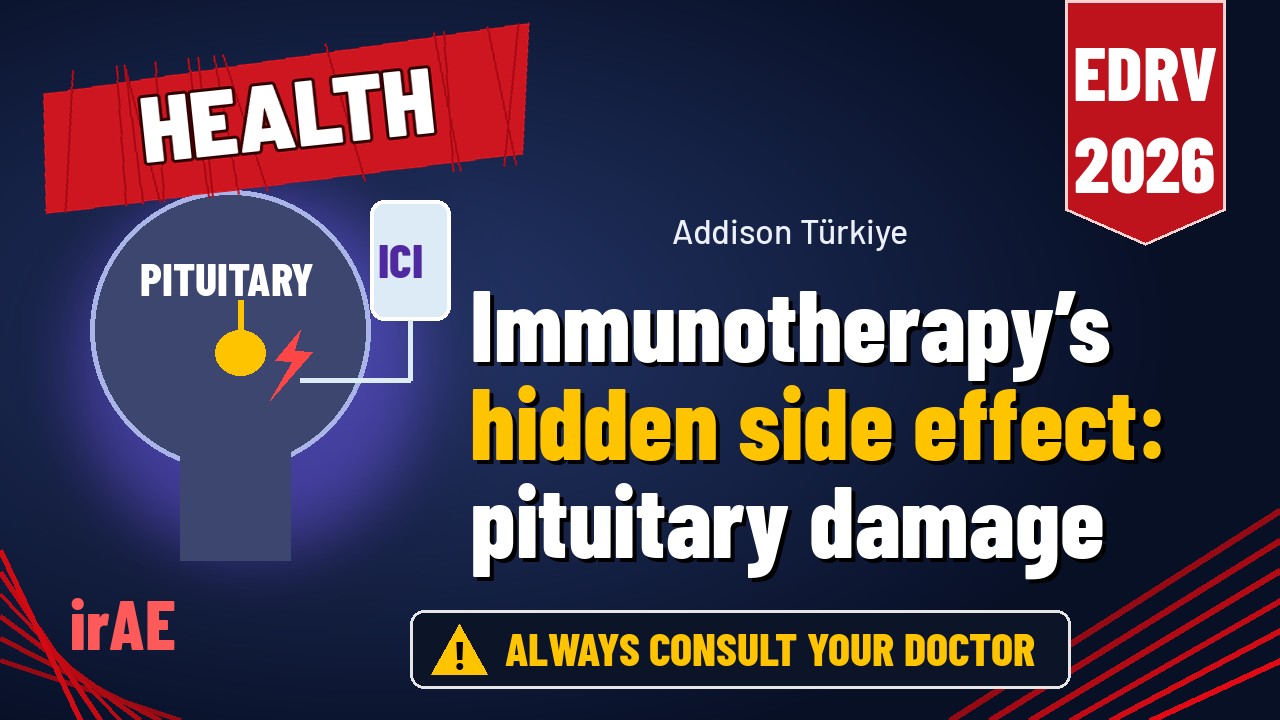
It covers pituitary damage caused by “immune checkpoint inhibitors” (ICIs) used in cancer treatment, and the adrenal insufficiency that can follow.
What is this about? (short)
Immune checkpoint inhibitors are drugs that help the immune system attack cancer cells. They have greatly improved survival in several cancers.
But the immune system can sometimes attack healthy organs too (irAE — immune-related adverse event). If the pituitary is affected, ACTH production can fall and the adrenal glands cannot make enough cortisol: this is called secondary (central) adrenal insufficiency.
Study summary
According to the authors, pituitary side effects are relatively common. Sometimes they present with clear adrenal insufficiency, but symptoms can be subtle and overlap with other treatment effects.
There is currently no validated biomarker (blood test marker) and no single unifying explanation for this side effect.
Possible pathways include activation of pre-existing autoimmunity, direct drug effects on the pituitary, anti-tumour immune responses that also hit the pituitary, and cytokine (inflammatory messenger) driven injury; mechanisms likely vary between patients.
The review discusses priorities for hormone replacement, patient education and long-term endocrine follow-up. As survival improves, better phenotyping, biomarkers and long-term outcome research are needed.
Who is it for?
Cancer patients receiving or who have received immunotherapy, and their families; oncologists and endocrinologists.
People who already have autoimmune disease (for example components of APS-2) and are planned for cancer immunotherapy.
Access / country context
This drug class is used in oncology clinics in many countries, including Türkiye. Pituitary side effects can appear even after treatment ends, so follow-up matters.
What it means for patients in Türkiye
If you are on or have had immunotherapy, tell your oncologist about unexplained fatigue, headache, nausea, loss of appetite or low blood pressure; your doctor decides whether hormone tests are needed.
People who develop adrenal insufficiency this way may also need an emergency card and sick-day plan, just like people with Addison’s. This article gives no dose information.
Warning: This is a news summary, not dose or treatment advice. Ask your endocrinologist.
Prepared by: Asistan · 16 November 2026. Source: Endocrine Reviews article abstract (PubMed).
Medical disclaimer: Information on this site is prepared by a patient community for general awareness; for diagnosis, treatment or dose changes always consult your own doctor (endocrinologist). In an emergency call your local emergency number.