
Priority: normal · Status: published
Date: 2026-07-09 (AACE Endocrinology and Diabetes, online publication; September–October 2026 issue, added to PubMed on 4 November 2026)
Source: AACE Endocrinology and Diabetes — PubMed — https://pubmed.ncbi.nlm.nih.gov/42979045/ · DOI: https://doi.org/10.1016/j.aed.2026.06.017
What happened?
A study from the Neuroendocrine Unit at Massachusetts General Hospital (Harvard Medical School) was published in AACE Endocrinology and Diabetes and added to PubMed in early November 2026.
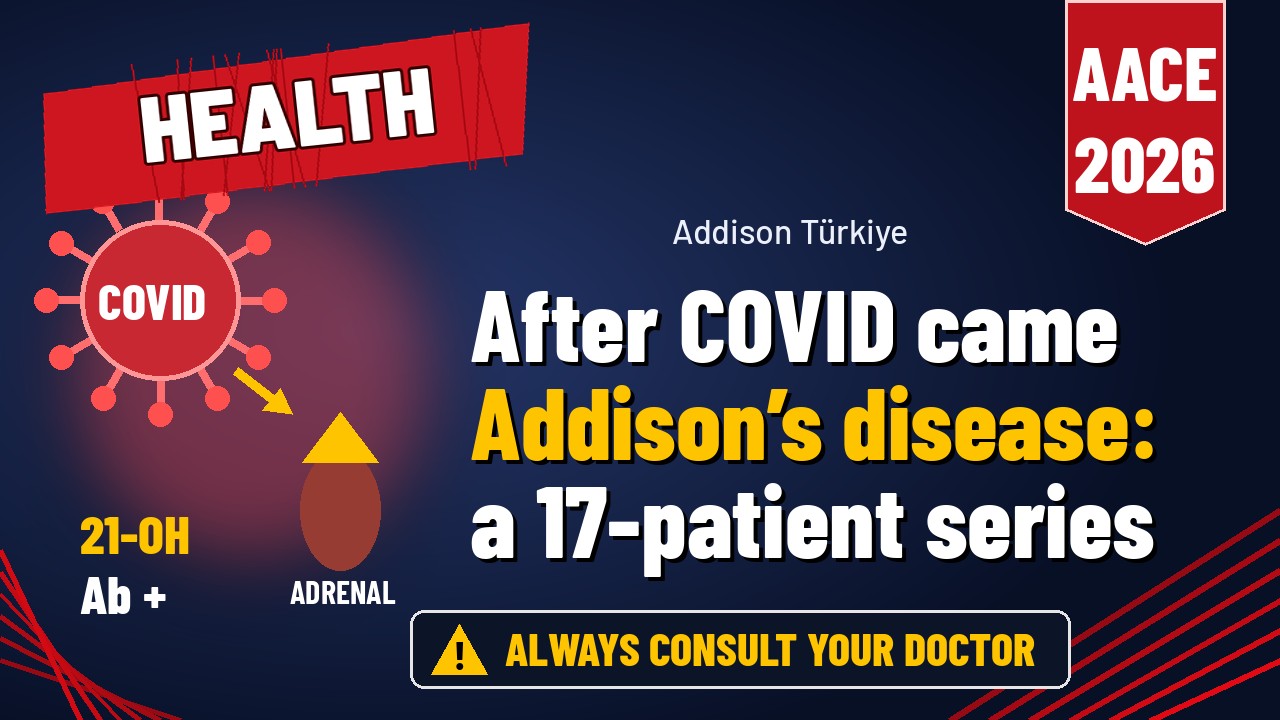
The team looked at patients who developed autoimmune (the immune system attacking the body’s own tissue) primary adrenal insufficiency — Addison’s disease — within 12 months of COVID-19.
What is this about? (short)
In Addison’s disease the adrenal glands cannot make enough cortisol. The most common cause is autoimmunity; “21-hydroxylase antibodies” in the blood are its key marker.
Isolated cases of Addison’s after COVID-19 had been reported before, but the link had not been well described.
Study summary
Among 138,052 positive COVID-19 PCR tests in a large hospital database, the team found 6 new cases and added 11 from the literature — 17 patients in total.
58.8% were male and 70.6% were under 30. A family history of autoimmune disease and a prior autoimmune disease were each present in 29.4%.
Addison’s was diagnosed a median of 21 days after COVID-19 (range 9–151 days). All 16 patients tested had positive 21-hydroxylase antibodies; adrenal shrinkage (atrophy) was seen in 64%.
The authors suggest severe illness and/or the virus may trigger autoimmune Addison’s in susceptible people. This is a case series; it does not prove cause and effect, and the condition is rare.
Who is it for?
People with unexplained fatigue, weight loss, nausea, salt craving or skin darkening in the weeks after COVID-19, especially if they or their family have autoimmune disease.
People with several autoimmune conditions, such as APS (autoimmune polyglandular syndrome), and their doctors.
Access / country context
21-hydroxylase antibody and morning cortisol/ACTH tests are available in many centres; access may vary by hospital.
What it means for patients in Türkiye
Long-lasting tiredness after COVID-19 is often put down to other causes, but Addison’s symptoms can look similar. If you are worried, tell your doctor clearly.
If you already have Addison’s, follow your doctor’s sick-day plan for COVID-19 as for any infection. This article gives no dose information.
Warning: This is a news summary, not dose or treatment advice. Ask your endocrinologist.
Prepared by: Asistan · 16 November 2026. Source: AACE Endocrinology and Diabetes article abstract (PubMed).
Medical disclaimer: Information on this site is prepared by a patient community for general awareness; for diagnosis, treatment or dose changes always consult your own doctor (endocrinologist). In an emergency call your local emergency number.